
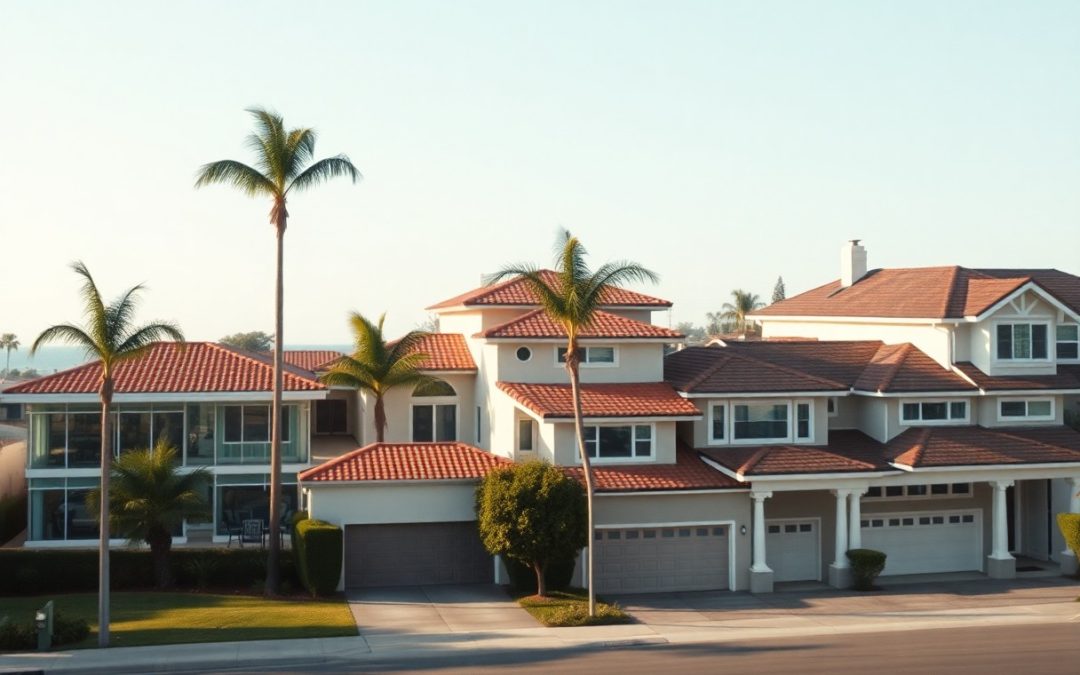
Just a short drive across Orange County reveals how your surroundings shape the homes you see. From coastal cottages in Laguna Beach to mid-century ranches in Orange and sprawling estates in Newport Beach, each city reflects its history, terrain, and culture in its architecture. You’ll notice Spanish tile roofs in Santa Ana, modern builds in Irvine, and beach bungalows in Huntington.
The Spanish Colonial Dream in San Clemente
You’ll notice San Clemente’s homes seem plucked from a Mediterranean postcard-curved arches, wrought iron details, and lush courtyards blending indoor and outdoor living. This coastal city embraces a romantic vision of Spanish Colonial Revival, where architecture feels both timeless and intentional, shaped by a founder’s bold dream.
Red Tile Roofs and White Stucco Walls
Red tile roofs crown homes with a distinct warmth, their terracotta hues contrasting beautifully against white stucco walls. You see this signature look throughout San Clemente, where sun-bleached exteriors and arched entryways create a cohesive streetscape rooted in Spanish design traditions.
The Architectural Vision of Ole Hanson
Ole Hanson, the city’s founder, imagined San Clemente as a Spanish-style seaside retreat for the middle class. You’re walking through his legacy-broad boulevards, central plazas, and strict design codes that still preserve the city’s unified aesthetic nearly a century later.
His 1925 master plan called for a “Spanish Village by the Sea,” and he backed it with binding covenants that mandated architectural harmony. You’ll find that even modern infill homes adhere to his original vision, using approved materials and design elements that honor the city’s historic character. Hanson didn’t just sell lots-he sold a lifestyle anchored in beauty, order, and Old World charm.
The Geometric Precision of Orange
You’ll notice how Orange’s postwar neighborhoods unfold in clean, deliberate patterns. Mid-century developers embraced order, laying out streets and homes with a grid-like consistency that reflects the era’s faith in progress and planning. Each tract feels intentional, designed for a growing Southern California dream.
Eichler Homes and the Modernist Grid
Developed in the 1950s, Eichler Homes in Orange follow a strict modernist blueprint. You’re greeted by flat planes, post-and-beam construction, and glass walls that erase boundaries between inside and out. These homes stand out for their symmetry, open layouts, and signature atriums that anchor daily life around natural light.
Post-War Optimism in Glass and Steel
Orange’s mid-century builders saw homes as symbols of a brighter future. You’ll find floor-to-ceiling windows, exposed steel beams, and minimalist lines that celebrate industrial innovation. These designs reflect a time when technology and optimism reshaped everyday living.
These homes weren’t just about style-they responded to a cultural shift. You entered spaces where walls of glass opened to private courtyards, blurring the line between structure and environment. Central heating, carports, and open-plan interiors catered to a new American lifestyle built on convenience, family, and connection to the outdoors. Architects prioritized function without sacrificing elegance, making modern design accessible to middle-class families.
Nautical Grandeur in Newport Beach
You’ll notice Newport Beach homes often mirror the elegance of coastal living, where salt-kissed breezes meet architectural flair. Waterfront estates boast expansive decks, white clapboard siding, and nautical detailing that reflect a maritime legacy. These residences blend luxury with seaside charm, offering panoramic views and yacht-accessible docks as standard.
Cape Cod Shingle Styles on the Peninsula
Strolling through Newport’s Peninsula, you’re surrounded by steep gabled roofs and cedar shingles weathered to soft grays. These Cape Cod-inspired homes feature shuttered windows and symmetrical facades, evoking New England charm with Southern California ease. Their timeless design stands out amid lush, manicured lawns and ocean breezes.
Modernist Verticality in Corona del Mar
Towering glass façades define many newer builds in Corona del Mar, where vertical lines stretch toward the sky. You’ll see homes embracing clean geometry, open floor plans, and disappearing edges that merge indoor spaces with coastal views. This modernist shift reflects a desire for light, space, and architectural boldness.
These modernist homes in Corona del Mar often rise across multiple levels, anchored into the coastal bluffs with steel and concrete. You’ll find floor-to-ceiling windows framing Pacific vistas, minimalist exteriors with textured stucco or charred wood, and rooftop terraces designed for sunset entertaining. The emphasis is on vertical expansion, maximizing views while maintaining privacy on narrow, sloped lots.
The Craftsman Legacy of Old Towne
Old Towne Orange stands as a living archive of early 20th-century American craftsmanship. You’ll recognize its charm in the low-pitched gables, exposed rafters, and handcrafted woodwork that define its historic streetscapes. This neighborhood doesn’t just preserve homes-it sustains a legacy.
Victorian Gables and Wide Porches
Victorian-era homes in Old Towne surprise with their steep gables and ornate trim. You’ll notice tall, narrow windows and expansive porches supported by decorative columns. These homes invite conversation and connection, built for a time when neighbors strolled the sidewalks in the evening light.
Preservation of the Pre-War Aesthetic
Strict design guidelines protect the authenticity of Old Towne’s pre-war homes. You’re required to match original materials when repairing facades or replacing windows. This ensures every renovation honors the neighborhood’s historical character without compromising structural integrity.
Preserving the pre-war aesthetic goes beyond regulations-it’s a community commitment. You’ll find homeowners investing in period-accurate lighting, hardware, and paint colors to maintain visual harmony. Local historians and preservation groups often consult on projects, ensuring that updates respect architectural integrity while meeting modern living standards. This shared dedication keeps Old Towne’s streets feeling timeless, not frozen, but thoughtfully evolving.
The Master-Planned Order of Irvine
Irvine stands apart with its meticulously organized neighborhoods shaped by decades of strategic development. You’ll notice how zoning, green spaces, and housing types are balanced to support both function and aesthetics. Every community fits within a broader vision, making the city feel cohesive yet diverse across its vast layout.
Mediterranean Motifs in the Suburbs
You see stucco walls, red-tile roofs, and arched entryways repeated throughout Irvine’s suburban tracts. These Mediterranean-inspired designs dominate even newer developments, linking aesthetics to climate responsiveness and regional identity. The style gives each neighborhood a sun-soaked, resort-like character that feels both familiar and intentional.
Visual Cohesion and Planned Uniformity
Design guidelines strictly regulate roof lines, paint colors, and landscaping to maintain harmony across blocks. You experience a sense of order as homes align in scale and style, avoiding visual clutter. This uniformity isn’t accidental-it’s enforced through homeowner associations and city planning standards from the outset.
What makes Irvine’s visual consistency so effective is the long-term enforcement of architectural controls. You’re not just seeing a trend-it’s a system. Each village operates under specific covenants that dictate materials, setbacks, and even garage placement. This ensures that even as homes age or get remodeled, the neighborhood’s original character remains intact, offering a rare level of predictability in Southern California’s ever-changing housing market.
To wrap up
From above, you see how housing styles across Orange County cities reflect distinct histories, economies, and cultural influences. Coastal towns favor airy, modern designs with ocean access in mind, while inland communities embrace suburban layouts and traditional architecture. Your understanding of these differences reveals more than aesthetics-it shows how location shapes living.