
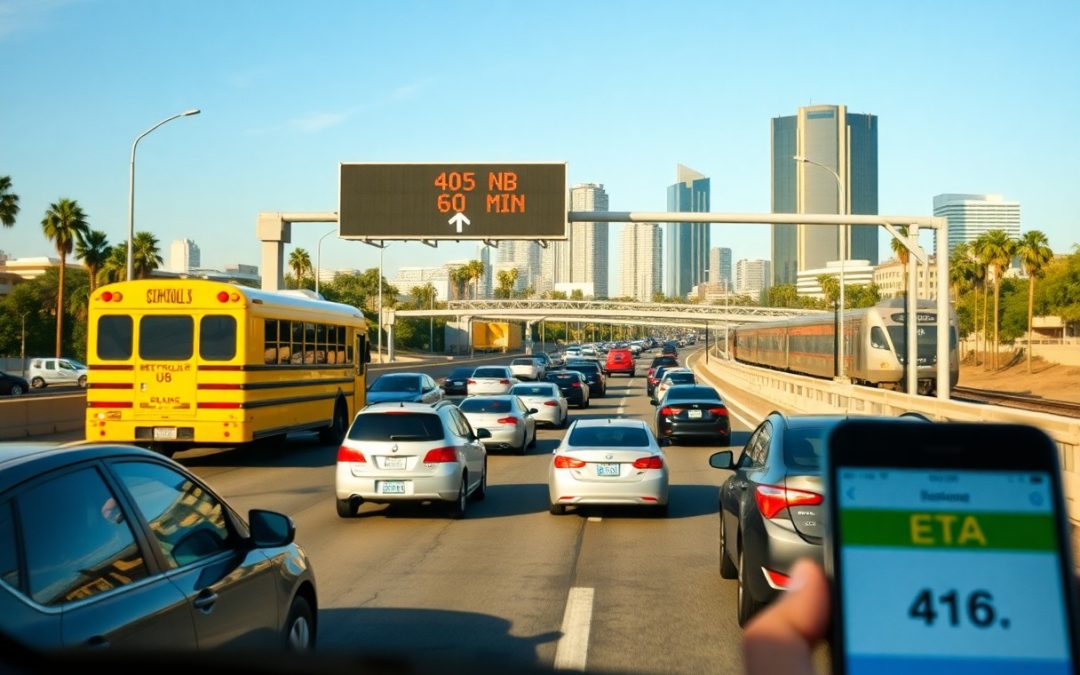
There’s no ignoring how daily gridlock shapes your routine in Orange County. Your commute affects everything from stress levels to family time, and the numbers back it up. With average delays rising each year, you’re not just losing minutes-you’re losing quality moments. This is your reality, and it’s time to understand it.
The Geography of the Freeway
Orange County’s freeway system shapes how you move, think, and live. The web of interstates and connectors wasn’t built just for cars-it was designed to direct behavior, separate communities, and prioritize speed over serenity. Every on-ramp and exit dictates rhythms in your day, often without you even noticing.
The 405 as a State of Mind
You don’t just drive the 405-you absorb it. Its endless stretches between Costa Mesa and Irvine seep into your mood, turning minutes into mental marathons. The brake lights ahead aren’t just traffic; they’re a meditation on patience, predictability, and the quiet frustration of moving nowhere at 65 miles an hour.
The El Toro Y and the Architecture of Anxiety
That split between the 5 and 133 doesn’t just confuse navigation-it triggers tension. You feel it in your shoulders as you choose north or east, knowing one wrong lane means miles lost. The El Toro Y isn’t just concrete and signage; it’s engineered stress.
Engineers designed the El Toro Y to handle volume, but they didn’t account for human hesitation. The merge zones are too short, the signage too delayed, and the consequences of indecision too high. You’re forced to make split-second choices at 70 mph, and that pressure builds a subconscious dread every time you approach it. This interchange doesn’t just move traffic-it shapes your stress response.
The Erosion of the Domestic Hour
Every extra minute stuck in traffic chips away at the quiet moments you once had to yourself. That time you used to spend sipping coffee, reading, or just breathing before the day began now vanishes into brake lights and slow-moving lanes. Your home life no longer starts at your front door-it’s delayed by miles and minutes you can’t reclaim.
Vanishing Mornings in the Driveway
You used to sit in your car after pulling into the driveway, not to rush inside, but to pause. That brief window-radio still on, engine cooling-let you shift from worker to parent, from commuter to partner. Now, even that sliver of transition is gone, swallowed by longer routes and gridlock that follows you home.
The Death of the Family Table
Dinner together feels like a relic of a slower time. When commutes stretch past an hour each way, coordinating meals becomes a logistical puzzle few families can solve. By the time you walk in the door, hunger has turned to exhaustion, and the table stays empty, replaced by microwaved plates eaten in silence.
What you lose isn’t just shared calories-it’s conversation, connection, the rhythm of checking in without distraction. Without consistent meals together, small tensions go unspoken, milestones go unnoticed, and children learn to navigate their days without that steady anchor. The family table wasn’t just furniture; it was the quiet center of your household, now displaced by the demands of the road.
The Psychological Toll of the Gridlock
Every minute stuck in traffic chips away at your mental well-being. You feel it in the tightness of your shoulders, the shortness of your breath. This constant state of low-grade stress rewires your nervous system, making calm reactions harder to access once you reach your destination.
The Solitude of the Soundproof Cabin
You sit surrounded by steel and glass, sealed off from the world yet hyper-aware of the hundreds just like you. Your car becomes a silent confessional where thoughts spiral unchecked. Alone together, you’re trapped in a bubble of isolation no playlist can fully dissolve.
The Aggression of the Idle
That honk behind you feels personal, even when it’s not. Minutes of stillness breed impatience, and small slights-like a late merge-ignite disproportionate anger. Your body tenses as frustration morphs into hostility, turning strangers into enemies over inches of asphalt.
When you’re stuck motionless, even a second-long delay can feel like an injustice. Your heart rate climbs not from exertion but from perceived disrespect. This simmering rage isn’t just about traffic-it’s the erosion of control, the feeling that your time, your choices, are being taken without consent. Over time, these moments accumulate, shaping how you respond to stress long after you’ve parked.
The Economic Tax on the Soul
Every minute stuck in Orange County traffic extracts a quiet toll not just on time, but on your sense of control. You trade hours meant for family, rest, or growth for the monotony of brake lights and missed exits. This slow erosion of personal agency wears down motivation and mental clarity, turning daily commutes into invisible labor no paycheck covers.
Fuel Consumption and the Wasted Wage
You pay twice at the pump-once with money, once with time. Idling in congestion burns fuel that drains your paycheck, while the hours lost could have earned more than the cost of gas. That extra $100 a month isn’t just spent; it’s evaporated in exhaust while you sit still on the 405.
The Paradox of Suburban Distance
You chose the suburbs for space and peace, yet now you race across counties just to reach work, school, or groceries. The very design meant to improve life forces you into isolation on the road. Distance that looks small on a map becomes hours of separation in reality.
Life in Orange County’s outer neighborhoods promises tranquility and room to breathe, but it demands long drives for every basic need. You moved farther out to save on rent or gain a backyard, only to lose evenings to round-trip commutes. Services, jobs, and social hubs remain concentrated in distant nodes, making car dependency unavoidable. What feels like a personal choice is often a structural trap-your freedom to live where you want is undercut by a transportation system that rewards proximity to freeways, not community.
The Culture of the Dashboard
Life in Orange County often unfolds behind the wheel, where the dashboard becomes your daily command center. You check fuel levels like vital signs, glance at the time more than your watch, and know every beep and warning light by heart. This small space governs your rhythm, turning commutes into rituals shaped by traffic patterns and destination countdowns.
Audiobooks as Digital Escapism
You press play before merging onto the 405, and suddenly you’re not stuck-you’re transported. Audiobooks turn gridlock into narrative journeys, letting you finish novels, learn history, or laugh at memoirs while crawling toward Irvine. That daily two-hour drive becomes your private classroom, theater, or escape hatch.
The SUV as a Primary Residence
Your SUV holds more than groceries-it stores your life. Water bottles, gym clothes, kids’ toys, and half-eaten snacks accumulate like artifacts of a mobile existence. With so much time spent driving, the backseat becomes a classroom, office, and dining room, blurring the line between transit and living space.
Spending three hours a day in your SUV reshapes how you organize life. You keep chargers, snacks, and spare clothes stocked like emergency supplies. School drop-offs, errands, and work meetings all flow through this rolling hub, making the vehicle less a tool and more a second home governed by the demands of Orange County’s relentless commute culture.
The Infrastructure of Dreams Deferred
Every morning, you surrender hours to freeways that promise mobility but deliver stagnation. Orange County’s roads were built for a mid-century vision of progress, yet they now trap you in a cycle of delayed arrivals and frayed patience. What was meant to connect you to opportunity instead fragments your time, your energy, your life.
The Phantom of Public Transit
Transit routes appear sparse and disconnected, as if designed to discourage use. You notice buses idling at empty stops while freeways pulse with gridlock. Trains run infrequently, often bypassing key job centers. What exists feels like an afterthought, not a real alternative for someone like you trying to get somewhere on time.
The Myth of the Open Road
Highway signs promise swift passage, but you know better. The open road is a relic, replaced by brake lights stretching to the horizon. You grip the wheel, surrounded by silence broken only by the hum of engines in neutral. Freedom once meant acceleration; now it means surviving the crawl.
That stretch of 405 between Irvine and Costa Mesa? You’ve watched sunrise bleed into gridlock from your driver’s seat more times than you care to admit. The lanes widen, then narrow, offering false hope before funneling you into the same bottleneck. Decades of planning prioritized cars, yet no amount of asphalt has restored the speed you were promised. You’re not driving-you’re waiting, and the road that once symbolized escape now feels like a loop with no exit.
Final Words
Now you face longer days as traffic in Orange County eats into your time, energy, and focus. Your commute shapes your routine, limits your choices, and affects your well-being. You adapt-waking earlier, adjusting schedules, seeking alternatives-but the congestion remains a constant force in your daily life.