
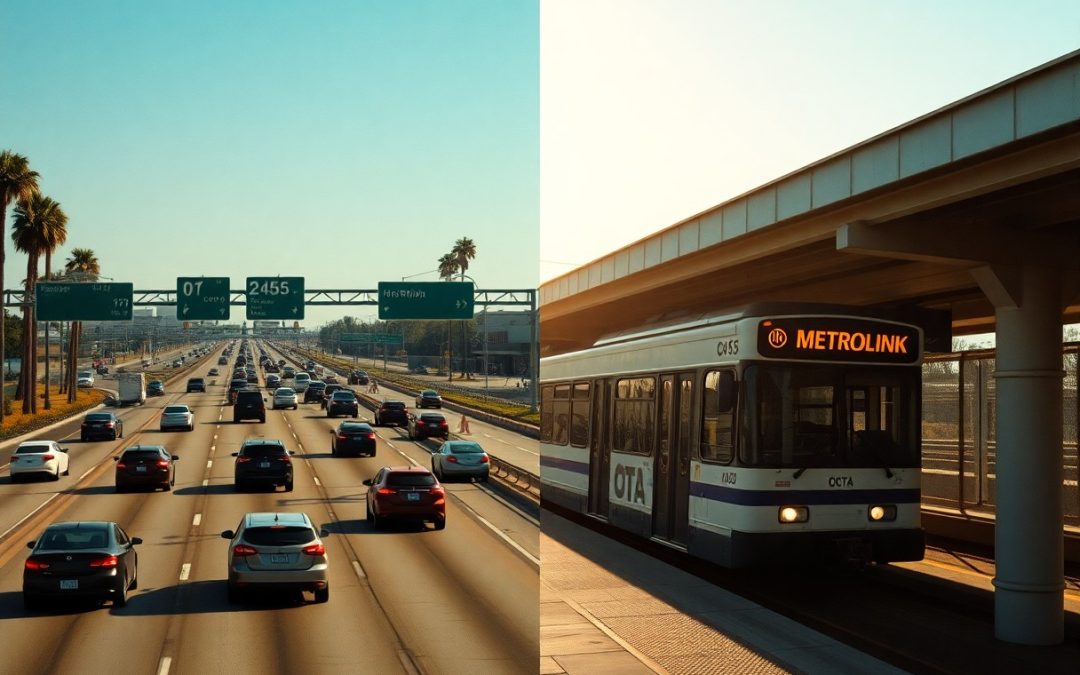
Most Orange County residents face a daily choice between driving and using public transit, each with distinct advantages and limitations. You deal with traffic congestion and parking costs when driving, while public transportation offers savings but may lack coverage or speed in certain areas. Your decision hinges on commute distance, schedule flexibility, and personal priorities.
The Freeway Mirage: Life Behind the Wheel
You experience freedom each time you start the engine, but Orange County’s open lanes often deceive. What seems like swift progress can dissolve into hours of motionless scrolling. The promise of control fades as congestion turns commutes into routines of frustration, revealing how deeply driving shapes your daily rhythm-and your patience.
The 405 and the Architecture of Traffic
You know the 405 as both a lifeline and a bottleneck. Its design funnels thousands through dense corridors, stacking cars like circuits in a machine. Rush hour transforms it into a slow-moving grid, where exits disappear in blind spots and timing means everything. This freeway doesn’t just carry traffic-it defines it.
Autonomy on the Pacific Coast Highway
You feel it the moment you turn onto PCH-windows down, ocean breeze, no rigid lanes dictating your pace. Here, driving isn’t about efficiency. It’s about choice: when to stop, where to look, how fast to go. The road bends with the coast, and for once, you’re not chasing time.
Coastal views unfold without warning on PCH, and you’re free to pull over at hidden lookouts or roadside taco stands. Unlike the rigid flow of inland freeways, this route rewards spontaneity. Traffic still happens, but it moves with the rhythm of beachgoers and surfers, not office clocks. You’re not just passing through-you’re part of the scenery.
Steel Ribbons: The Metrolink Experience
Metrolink connects Orange County to regional hubs with reliable commuter rail service. You’ll find it efficient for long-distance travel during peak hours, especially along the busy 91/Perris Valley and Orange County lines. Trains offer a quiet alternative to freeway congestion, though frequency drops significantly outside rush periods.
Commuter Rail and the Quiet Car
Quiet Cars are designated on most Metrolink trains to support focused or restful travel. You must silence devices and keep conversations to a minimum. These cars attract professionals and students seeking a calm ride, making them ideal if you value a peaceful commute.
Station Logistics and Last-Mile Gaps
Most Metrolink stations sit miles from final destinations. You’ll often need a bus, bike, or ride-share to close the gap. Parking is usually available, but off-peak service gaps can leave you waiting longer than expected.
Reaching your destination from a Metrolink stop often requires planning beyond the train schedule. Stations like Irvine, Santa Ana, and Fullerton connect to local buses, but routes don’t always align with train arrivals. You may face 15- to 30-minute waits or walk distances exceeding a mile, especially in suburban zones with limited pedestrian infrastructure. Rideshares help, but costs add up over time.
The OCTA Network: Street-Level Realities
You experience the OCTA bus system differently depending on where you are in Orange County. In denser cities like Santa Ana or Anaheim, service is frequent and routes are well-established. Out in the suburbs, buses come less often, and stops may lack shelters or real-time signage. Your wait times and comfort depend heavily on location.
Public Bus Patterns in Suburban Sprawl
Traversing OC’s low-density neighborhoods by bus means longer travel times and indirect routes. You’ll notice buses often run only hourly on wide arterial roads with few transfers. Coverage drops sharply once you move beyond commercial corridors, leaving you with limited access to residential pockets.
Connectivity Across City Lines
Crossing municipal borders by bus can test your patience. You might wait longer at key transfer points like the Fullerton Transportation Center, where routes from different cities converge. Schedules aren’t always aligned, so a simple trip between neighboring cities can stretch into an hour-long connection.
When you’re relying on OCTA to move between cities like Irvine and Buena Park, timing becomes critical. Each city manages aspects of local service, which leads to inconsistent frequency and route planning at borders. You’re often forced to plan around gaps rather than direct links, especially during evenings and weekends when service thins out significantly.
Economic Weights: The Price of Motion
Choosing how you move across Orange County directly impacts your monthly budget. Driving adds up fast between gas, maintenance, and parking, while public transit offers predictable costs. You’re trading flexibility for savings-or convenience for control over expenses. The real cost isn’t just at the pump; it’s in long-term financial trade-offs you might not see at first glance.
Fuel Costs and Parking Tolls
Every gallon you pump pulls more from your wallet, especially with fluctuating gas prices in Southern California. You’re also paying for parking at malls, beaches, and workplaces-sometimes more than $10 a day. These daily charges stack up, turning short trips into expensive habits without you noticing.
Monthly Passes and Transit Savings
A single OC Bus or Metrolink pass can cost under $100 a month, giving you unlimited rides across most of the county. You skip the surprise expenses of driving and gain peace of mind. That flat rate protects you from spikes at the pump or surprise parking tickets.
Monthly transit passes often include transfers between buses and trains, plus connections to bike-sharing and ride-hailing discounts. Some employers and schools even cover part or all of the pass cost. When you calculate the average $9,000 annual expense of car ownership in Orange County, riding public transit isn’t just affordable-it’s a smart financial move that compounds over time.
Environmental Footprints in the Dust
Every time you start your car, you add to a growing environmental cost across Orange County. Transportation dominates regional emissions, with single-occupancy vehicles leading the charge. Choosing how you move shapes air quality, noise levels, and long-term sustainability far beyond your daily commute.
Carbon Output and Coastal Air
You breathe the results of traffic congestion with every mile driven on the 405 or 55. Cars emit greenhouse gases that trap heat and pollutants that cloud coastal skies. Public transit produces fewer emissions per rider, helping keep Southern California’s breezes cleaner and healthier for everyone.
Sustainable Shifts in Southern California
Orange County is expanding eco-friendly transit options, from upgraded bus networks to new bike lanes and electric shuttles. You now have more low-impact ways to travel, reducing reliance on gas-powered vehicles and supporting regional climate goals without sacrificing convenience.
Local agencies are investing in zero-emission buses and integrating clean energy into transit hubs, making public transportation a greener daily choice. You’re not just avoiding traffic when you ride the bus or train-you’re part of a broader shift toward cleaner infrastructure that benefits public health and the environment across the Southland.
To wrap up
So you have choices when moving through Orange County-driving offers flexibility, but public transportation saves money and reduces congestion. You face traffic on the 405 or 5, but buses and the Metrolink provide reliable alternatives. Your decision depends on convenience, cost, and time. Know the options so you travel smarter.