
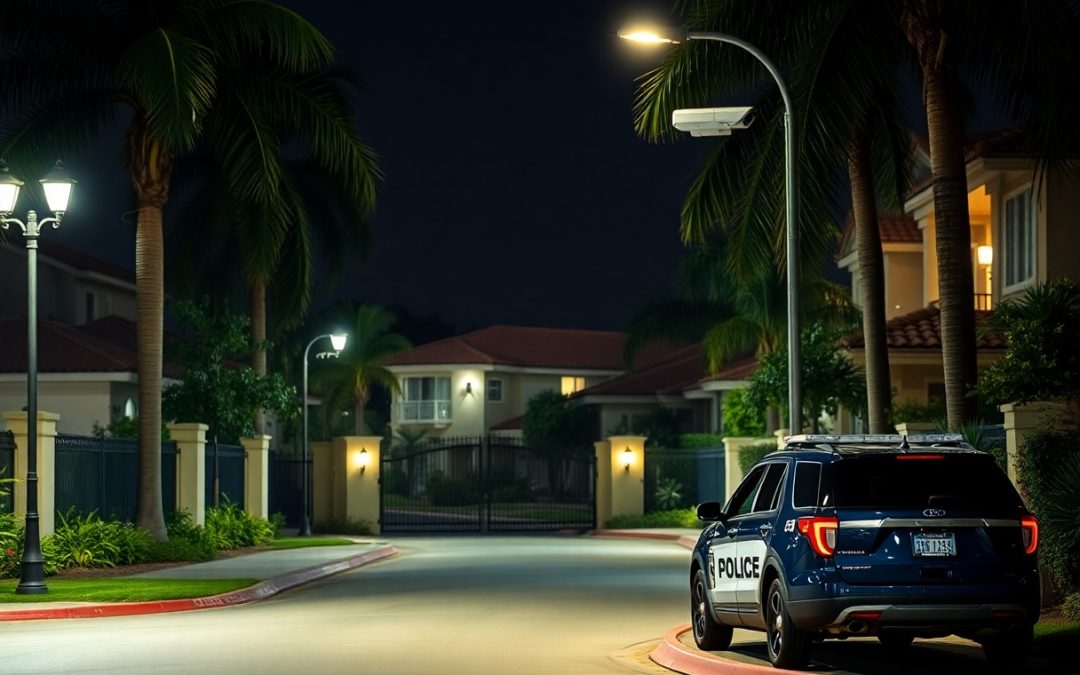

It’s natural to wonder how secure your neighborhood is when choosing where to live. Orange County’s communities consistently rank among the safest in California, with low violent crime rates and well-resourced law enforcement. You’ll find that cities like Irvine, Mission Viejo, and Laguna Niguel maintain strong public safety through community policing and proactive neighborhood programs.
The Mirage of the Gated Horizon
Security Through Exclusion?
You’ve likely seen the tall walls, the guard booths, the signs promising a safer life behind iron gates. These communities sell peace of mind, but data shows crime doesn’t vanish-it often shifts, finding softer targets nearby. Your sense of safety may rise, yet isolation doesn’t guarantee security, and the illusion of control can leave you unprepared for real risks just beyond the entrance.
The Coastal Sentinel and the Inland Silence
You notice the difference the moment you cross into coastal neighborhoods-police patrols are visible, surveillance cameras mark intersections, and emergency alerts reach phones within seconds. Inland areas rely more on community watch programs and slower response systems, creating a quieter, less monitored environment. Your safety depends on where you live, and that divide shapes daily life across Orange County.
The Surveillance of the Private Drive
You likely notice cameras at your neighborhood’s entry points, scanning every car that comes and goes. These systems track license plates, log arrival times, and alert security to unapproved vehicles. While they deter trespassers and reduce break-ins, they also record your daily routines. You trade some privacy for the promise of safety, a balance each resident must weigh personally.
Economic Borders and the Map of Risk
Income and Safety Patterns
You see clear connections between household earnings and neighborhood safety across Orange County. Areas with higher median incomes often report lower crime rates, not because wealth prevents crime, but because economic stability supports better services, lighting, and community oversight. Your daily experience may depend heavily on which side of these invisible financial lines you live.
The Mechanics of Emergency and Response
You can count on Orange County’s emergency services to act quickly when crises arise. A network of trained firefighters, paramedics, and law enforcement officers operates around the clock, using advanced communication systems to coordinate responses. Dispatch centers prioritize calls efficiently, ensuring help arrives within minutes in most areas. Regular drills and interagency cooperation keep response teams sharp and prepared for everything from medical emergencies to natural disasters. Your safety is supported by systems built for speed and reliability.
The Psychology of the California Cul-de-sac
You experience a subtle sense of security the moment you turn onto a quiet Orange County cul-de-sac. The curved dead-end streets slow traffic, but they also shape how you interact with neighbors and perceive safety. These designs encourage familiarity, where faces become known and routines feel predictable. Your environment silently reinforces a bubble of control, where the outside world seems just far enough away.
Final Words
To wrap up, you live in one of California’s safest regions, where violent crime rates consistently fall below national averages. Orange County communities benefit from strong local policing, active neighborhood watches, and low property crime in many areas. Your safety is supported by consistent data and community engagement, making daily life secure for most residents.