
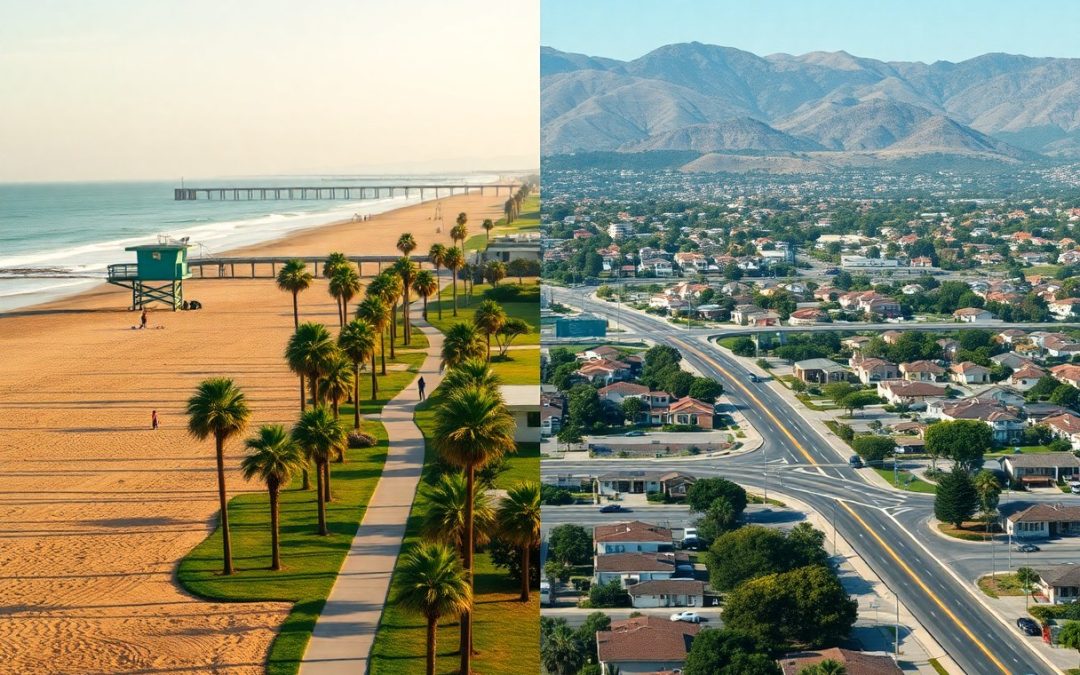
Most people moving to Orange County notice the sharp contrast between coastal and inland lifestyles right away. You experience cooler ocean breezes, higher housing costs, and a walkable culture near the shore, while inland areas offer more space, warmer temperatures, and faster-paced suburban growth-all shaping your daily life in distinct ways.
The Geography of the Soul
Life shapes differently where land meets sea. In Orange County, your surroundings don’t just define your view-they influence your rhythm, your pace, your sense of possibility. The ocean pulls with a magnetic calm, while the inland valleys hum with quiet ambition.
The Edge of the Continent
Coastal living hands you horizons that stretch into endless blue. You wake to salt in the air and the sound of waves grounding your thoughts. Every sunrise over the Pacific feels like a quiet promise, shaping a mindset rooted in openness and reflection.
The Basin of Dreams
Inland, the hills rise gently around neighborhoods where ambition settles into driveways and backyard barbecues. You trade ocean breezes for sun-drenched afternoons and a different kind of space-one that values privacy, growth, and room to breathe.
Here, the Basin of Dreams isn’t just geography-it’s a mindset. You’ll find families building lives across spacious lots, schools with strong programs, and commutes that test patience but offer affordability. The pace is steadier, the community tighter, and the dream of home ownership more within reach.
The Architecture of the Horizon
You notice how the coast shapes not just lifestyles but structures too. Oceanfront homes favor open layouts and expansive glass to capture light and views, while inland designs respond to heat and terrain with more enclosed, grounded forms. The horizon doesn’t just mark where land meets sea-it defines how homes are built to belong.
Glass and Spray
Living near the shore, you see homes clad in glass and steel, built to withstand salt and wind while framing endless blue. Sliding walls dissolve boundaries between inside and out, inviting ocean breezes into open spaces. These homes don’t just face the sea-they embrace it, designed to let spray and sunlight shape daily life.
Stucco and Shadow
Further inland, you find homes rooted in earth-toned stucco, with deep eaves and shaded courtyards that block the sun’s intensity. Architecture here relies on mass and texture, using walls not just for structure but for cooling. These designs grow from a need to temper heat, creating pockets of relief in broad daylight.
Stucco and Shadow reflects a design response to inland Orange County’s hotter, drier climate. You’ll see low-slung ranch styles, tile roofs, and north-facing patios that minimize solar gain. Courtyards act as thermal buffers, while neutral tones blend with chaparral hills. These homes prioritize comfort through passive cooling, proving beauty emerges not just from view, but from adaptation.
The Rhythm of the Road
Daily commutes shape your experience of Orange County in ways few consider. Coastal routes unfold with ocean breezes and scenic overlooks, while inland corridors pulse with efficiency and speed. Your choice of path influences more than travel time-it reflects a lifestyle.
The Coast Highway
Driving Pacific Coast Highway, you’re met with sweeping ocean views and a slower pace. Traffic flows in rhythm with beachgoers and cyclists. This route isn’t just a road-it’s a destination, where every mile feels like a pause.
The Inland Arteries
Interstate 5 and State Route 91 move you quickly between cities like Anaheim and Irvine. You’ll notice wider lanes, more on-ramps, and a constant hum of commercial traffic. These roads prioritize efficiency, connecting suburbs and workplaces with relentless momentum.
On the inland arteries, your drive reveals the practical backbone of Orange County. Freeways here are engineered for volume, accommodating long-distance commuters and delivery routes alike. You’ll pass shopping centers, office parks, and housing developments that thrive on accessibility. While less scenic, these roads offer predictability and direct access to key hubs, shaping how you structure your day.
The Social Fabric
Life in Orange County shifts subtly the moment you move from coast to inland. You’ll notice how conversations flow with salt-kissed ease near the water, while backyard barbecues inland follow a more structured rhythm. Your sense of community depends heavily on which side of the 405 you call home.
The Surf Elite
You’re greeted by a quiet hierarchy when you settle near the breaks of Huntington or Newport. Locals judge your credibility by your board, your stance, even how early you arrive at the lineup. Belonging here isn’t claimed-it’s earned wave by wave.
The Suburban Order
You’ll find predictability in the tree-lined cul-de-sacs stretching from Irvine to Yorba Linda. Neighbors exchange nods at HOA meetings, and weekend routines revolve around soccer practice and farmers’ markets. Order isn’t enforced-it’s expected.
Suburban communities thrive on consistency, and you quickly learn the unspoken rules: trash bins are out by Tuesday morning, holiday lights go up the Friday after Thanksgiving, and front lawns stay immaculate. Schools, safety, and scheduled events shape daily life, offering stability that draws families year after year. Your neighbors may not surf, but they know their homeowners’ association bylaws by heart.
The Economic Reality
You face a clear financial divide when choosing where to live in Orange County. Coastal cities command higher prices across housing, rentals, and daily expenses, driven by demand for proximity to the ocean. Inland communities offer more affordable options, attracting families and professionals seeking value without sacrificing access to quality schools or amenities.
The Premium of the Blue
Proximity to the Pacific adds cost at every turn. Homes near the coast often carry price tags 30-50% higher than comparable properties inland. You pay not just for views and breezes, but for the prestige of a beach-adjacent ZIP code that shapes insurance rates, property taxes, and even grocery bills.
The Landlocked Utility
Inland areas prioritize practicality over postcard appeal. You gain more square footage for your dollar, with newer developments, larger lots, and lower property taxes. These neighborhoods cater to budget-conscious buyers who still want strong schools, shopping centers, and quick freeway access without oceanfront premiums.
Space becomes your advantage when settling inland. You’ll find master-planned communities with parks, trails, and energy-efficient homes designed for Southern California’s warmer climate. Municipal budgets often go further here, funding well-maintained libraries, recreation centers, and public safety programs that enhance daily life without relying on tourist-driven revenue streams.
The Cultural Divide
You experience a clear cultural split when moving from the coast to inland Orange County. Coastal communities embrace a relaxed, progressive mindset shaped by beach culture and tourism, while inland cities reflect more conservative, family-centered values rooted in suburban growth and long-term residency. These differences influence everything from politics to lifestyle choices.
Coastal Rebellion
You notice a spirit of independence in coastal towns like Laguna Beach and Sunset Beach, where artistic expression and nonconformity thrive. This rebellious streak shows up in local art scenes, open-minded policies, and a resistance to rigid structure-residents here often define themselves by what they’re not: conventional, predictable, or inland.
Inland Tradition
You find stability in inland cities like Yorba Linda and Anaheim Hills, where neighborhood barbecues, school sports, and Fourth of July parades remain central. These communities value consistency, with many families staying for generations, shaping a culture built on familiarity, local pride, and predictable rhythms of suburban life.
Life in inland Orange County carries a quiet consistency that shapes how you raise your family and spend your weekends. Churches, Little League fields, and neighborhood associations form the backbone of social life, and there’s comfort in routine. Homes often have larger yards, streets are quieter, and neighbors tend to know each other by name-this is a world where front-porch conversations still happen and community means something tangible.
To wrap up
As a reminder, coastal living in Orange County offers ocean access, milder temperatures, and higher property values, while inland areas provide more space, lower costs, and warmer weather. You experience distinct lifestyles depending on location-coastal communities emphasize beach culture and tourism, whereas inland cities focus on suburban comfort and commuting practicality. Your choice shapes daily routines, expenses, and long-term plans.