
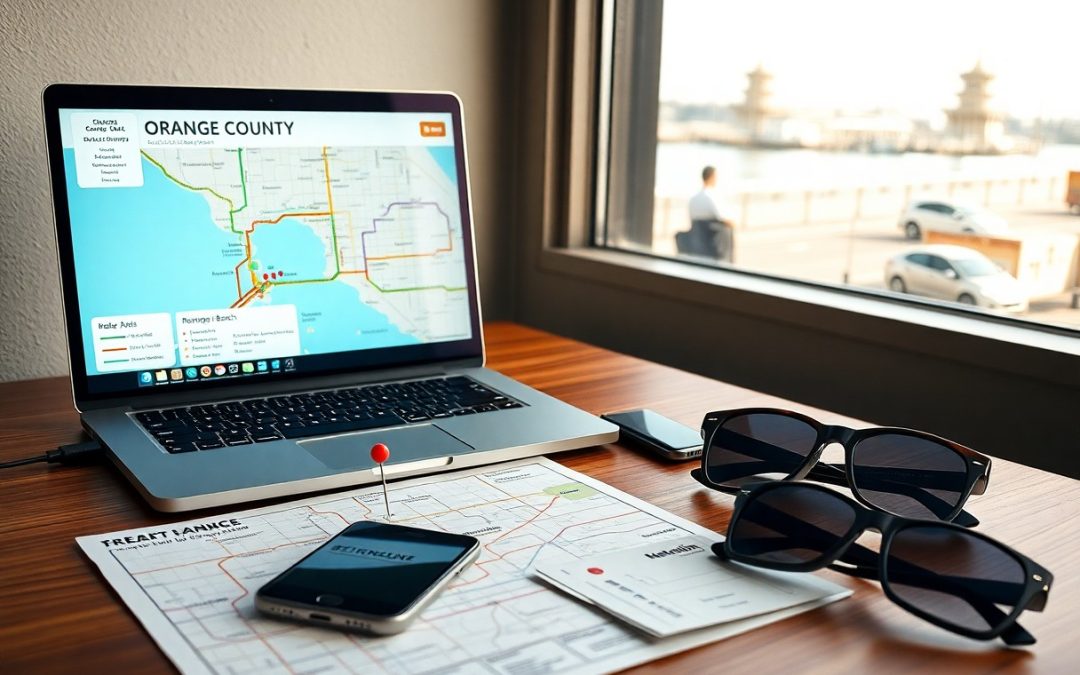
You can save time and reduce stress by mapping out your Orange County trips with clear goals and smart timing. Know the major routes, public transit options, and peak traffic hours between cities like Anaheim, Irvine, and Laguna Beach. A well-structured plan keeps your day on track and your travel smooth.
Evaluating Key Travel Factors Across the County
- Traffic patterns vary significantly from Irvine to Anaheim
- Public transit access differs by municipality
- Weather rarely impacts roads but can affect bike routes
- Parking availability shapes downtown commutes
Though each city maintains its own rhythm, you’ll find consistency in regional infrastructure. Thou must weigh these variables to move smarter across borders.
Understanding Peak Traffic Windows and Rush Hour
Peak congestion hits between 7-9 AM and 4-6 PM along major corridors like the 405 and 55. You’ll face heavier delays near business districts and schools during these times. Adjusting your departure by even 20 minutes can reduce travel time significantly. Plan around these windows whenever possible.
Analyzing Distance and Proximity Between Regional Hubs
Distance between Santa Ana and Newport Beach is under 10 miles, yet travel time varies widely by mode. You experience faster connections via the 73 toll road than surface streets. Proximity doesn’t always mean quick access-traffic signals and route design play key roles. Thou should assess both mileage and real-world transit efficiency.
Regional hubs like Costa Mesa, Irvine, and Anaheim form a triangle of economic and cultural activity, often drawing cross-county trips. While geographically close, their connectivity depends on freeway interchanges and arterial road capacity. You’ll notice that direct routes aren’t always the fastest, especially when merging onto congested freeways. Evaluating actual travel duration-not just map distance-helps you make sharper decisions when moving between centers.

How to Choose the Most Efficient Transit Methods
Matching your travel needs to the right transit option saves time and reduces stress. You know your destination and schedule-use them to decide between rail, bus, or rideshares. Peak hours often favor trains, while off-peak trips may work better with local routes. Always check real-time updates before leaving.
Maximizing the Metrolink and Rail Network
Metrolink connects key Orange County cities with reliable commuter rail service. You’ll benefit most by planning trips around its schedule, especially for longer distances like Irvine to San Juan Capistrano. Use park-and-ride stations to avoid downtown congestion and secure seating during busy times.
Integrating Local OCTA Bus Routes and Shuttles
OCTA buses cover areas rail can’t reach, making them crucial for last-mile connections. You can transfer seamlessly between Metrolink and designated bus lines using a unified fare card. Study route maps to identify high-frequency corridors that align with your commute.
Local OCTA routes operate with precision in cities like Anaheim, Santa Ana, and Fullerton, offering frequent stops and dedicated shuttle loops in business districts. You’ll cut travel time by using express buses during rush hours and taking advantage of real-time tracking through the OCTA app. Many routes also link directly to Metrolink stations, creating a cohesive network that keeps you moving without relying on a car.
Expert Tips for Navigating Major Freeways
- Check real-time traffic apps before merging onto highways
- Avoid peak hours on the 405 between Irvine and Costa Mesa
- Use carpool lanes during rush periods if eligible
- Stay right unless passing to keep traffic flowing
Though congestion is common, smart timing and lane discipline make a difference. Thou can shave 20 minutes off a cross-county drive with minimal effort.
Strategic Use of the 405, I-5, and 55 Corridors
Each of these freeways serves a distinct spine of Orange County. The 405 links dense coastal cities and demands early or late travel to avoid gridlock. I-5 moves north-south through Santa Ana and Anaheim with more consistent speeds. The 55 offers a quicker inland alternative between Costa Mesa and Orange. Thou should treat them as complementary routes, not competitors.
Leveraging Toll Roads to Bypass Heavy Congestion
The 73 and 133 toll roads provide reliable travel when surface streets clog. Managed lanes adjust pricing based on demand, ensuring steady flow. Access is simple with a FasTrak transponder. Thou gain time during peak hours without detours.
Toll roads like the 73 along the coast and the 133 in the eastern corridor are engineered for speed and consistency. Unlike free highways that slow to a crawl during rush periods, these routes limit access and manage volume to maintain flow. Drivers with a FasTrak account can enter seamlessly and often cut travel time in half, especially between Laguna Niguel and Tustin or Aliso Viejo and Irvine. The cost is minor compared to the value of time saved.
How-to Sequence Multi-City Itineraries
Ordering your stops by geographic flow saves time and reduces backtracking. You’ll cover more ground efficiently when neighboring cities are grouped in logical clusters. Plan each leg with proximity in mind, using major roads like the 405 or 55 to guide your route. This approach keeps driving stress low and your schedule on track.
Grouping Coastal Destinations for Seamless Movement
Start with Newport Beach, then move south to Laguna Beach and Dana Point. These cities follow a natural shoreline progression, linked by CA-1. Parking near main piers lets you walk between shops, dining, and beaches. You’ll spend less time driving and more time enjoying the oceanfront rhythm of coastal OC.
Organizing Inland and Business District Stops
Cluster visits to Santa Ana, Tustin, and Irvine around weekday mornings when traffic is lighter. These hubs host government offices, corporate parks, and shopping centers best accessed before noon. Scheduling appointments or errands in one loop prevents repeated trips across the 5 or 405 freeways.
When handling inland and business district stops, timing and zoning matter. Santa Ana’s civic center, Irvine Spectrum’s business corridors, and Tustin Legacy’s offices each draw midday congestion. You’ll move faster by tackling errands early, grouping similar tasks-like permits or bank visits-into a single run. Parking near John Wayne Airport can also serve as a central transfer point when switching between districts.
Essential Tips for Parking and Last-Mile Connectivity
- Use municipal parking apps to reserve spots in advance
- Target garages near transit stations for easier access
- Check for time limits and weekend enforcement rules
- Combine parking with walking or micro-mobility options
Knowing where to park saves time and reduces stress when moving between urban centers.
Identifying Centralized Parking in Dense Urban Hubs
City-run parking structures in places like Santa Ana and Costa Mesa offer secure, monitored spaces near key destinations. These hubs often connect to transit lines or downtown districts, minimizing the need to circle crowded blocks. You’ll find real-time availability through local parking apps, helping you plan stops efficiently.
Utilizing Micro-Mobility and Pedestrian-Friendly Paths
Shared e-scooters and bike lanes make reaching your final stop fast and emission-free. Cities like Irvine and Anaheim have expanded designated pathways that link transit points with shopping, dining, and entertainment zones. These routes are well-lit and marked, ensuring safe travel even during evening hours.
Many Orange County neighborhoods now prioritize walkability with wide sidewalks, crosswalk signals, and shade-covered paths. You can easily cover half a mile from a parking garage or transit stop using these networks. E-scooters from licensed providers are available at docking stations near major plazas and parks, giving you flexible, on-demand movement without the hassle of car re-entry.
Managing Logistics with Real-Time Data
Smart travel in Orange County relies on up-to-the-minute information. You can adjust your route and timing instantly when you tap into live data streams that reflect current road and transit conditions across cities like Irvine, Anaheim, and Santa Ana.
Monitoring Live Traffic Apps for Dynamic Rerouting
Google Maps and Waze show you exactly where congestion builds on the 405 or 55 during rush hour. You see slowdowns as they happen, so you can pivot quickly and avoid costly delays on your commute or weekend trip.
Using Digital Tools for Accurate Transit Scheduling
OC Bus and Metrolink apps give you real-time arrival estimates and service alerts. You plan connections with confidence, knowing when your bus or train will actually arrive, not just what the printed schedule says.
These tools pull live GPS data from vehicles, updating departure and arrival times every few seconds. You receive push notifications for delays or gate changes, allowing you to adjust plans without stress. Scheduling around real performance-not static timetables-means fewer missed connections and more productive use of your time across Orange County’s transit network.
Summing up
Summing up, you save time and reduce stress by mapping your route across Orange County cities with real-time traffic apps and public transit schedules. You maximize efficiency when you group nearby destinations, travel during off-peak hours, and use park-and-ride options where available. Planning ahead ensures your trips are smooth and productive.